
Takeaways for Leaders
Name the bet, then commit to proof.
Say what this place is supposed to change, and what signals will prove it’s working (or not). If you can’t explain what the place is meant to prove, drift is guaranteed.
Design for pride and proof.
Pride mobilizes residents, donors, and partners to show up. Proof keeps boards and oversight bodies committed when scrutiny rises and budgets tighten. The durable wins in these cases were story + measurement together, not one substituted for the other.
Build a system, not a moment—and staff it with owners.
Most value comes after opening: programming, narrative discipline, stakeholder confidence, and feedback loops that keep the place doing its job. That requires an ownership model (clear decision rights, real accountability to outcomes, and the ability to adapt fast) rather than a stack of disconnected deliverables.
1
Treat Place as a Thesis, Not a Project.
Every investment in place is, underneath the surface, a thesis:
- “If we invest in statewide summer demand, tax revenue and small-town main streets will follow.”
- “If we give the next generation of city-builders a home base, the next economy will have a shape and a center.”
- “If we build a park of this caliber, we can change how people meet across lines that usually keep them apart.”
- “If we host a global cultural institution, the city’s reputation will move beyond old stereotypes.”
When leaders skip the thesis work, the project drifts. It becomes about amenities, logos, or launch events.
The leaders behind Best Summer Ever, Citizen, Gathering Place, and the Bob Dylan Center did the opposite.
They named the stakes early:
- For the state, summer was a revenue and pride moment, not just a campaign window.
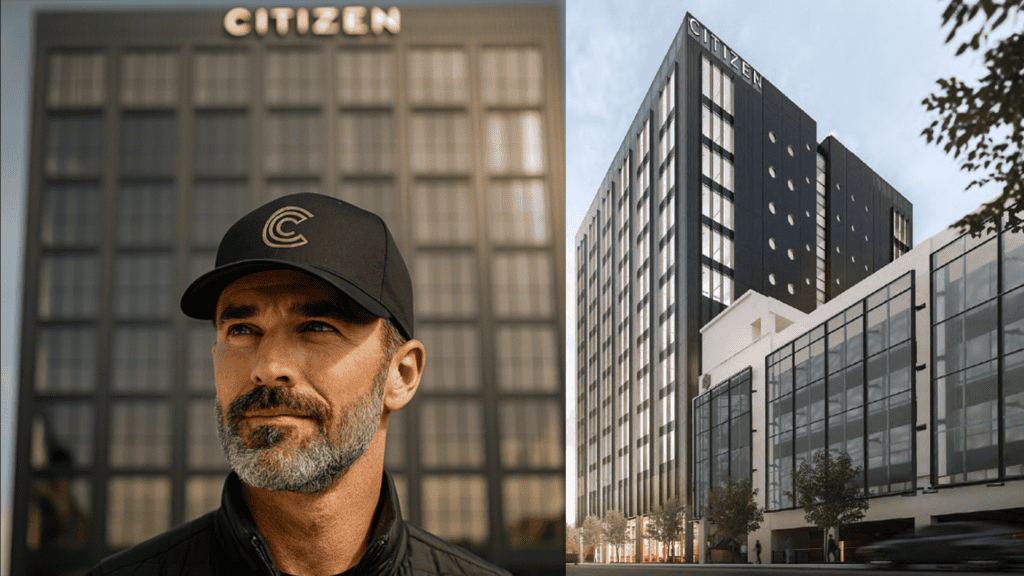
- For Oklahoma City, Citizen had to make the innovation story visible in one glance.
- For Tulsa, Gathering Place and the Bob Dylan Center had to stand up to national judgment and local doubt at the same time.
Here’s how the thesis work showed up in practice:
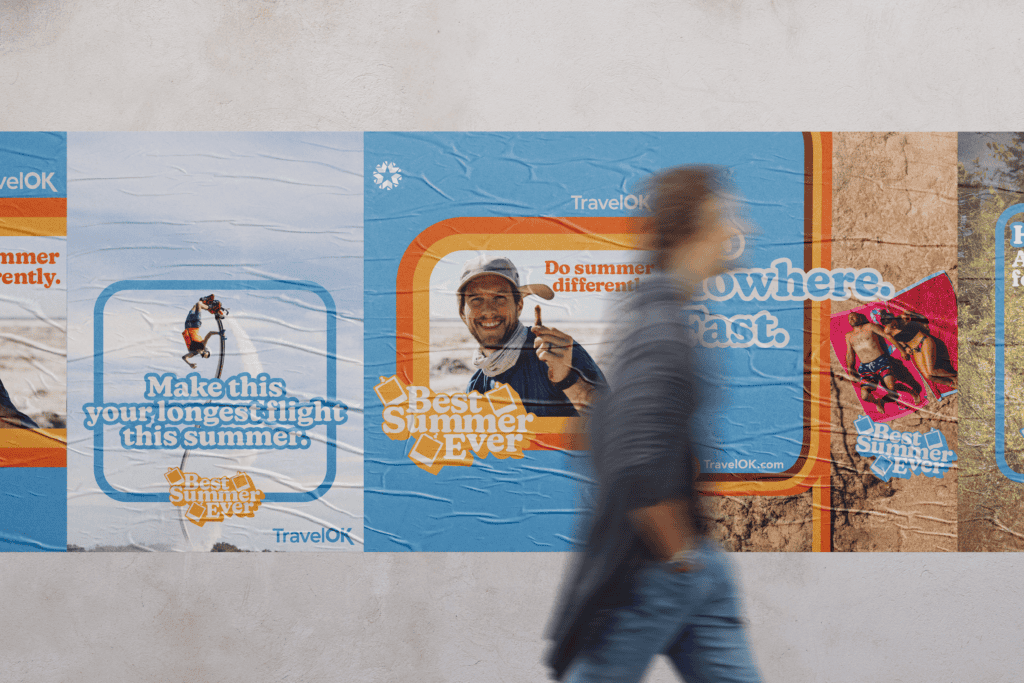
- Best Summer Ever: Saxum worked with the Oklahoma Tourism & Recreation Department to define success in concrete terms: more park bookings, higher revenue, and measurable lift in visitation, not just impressions.
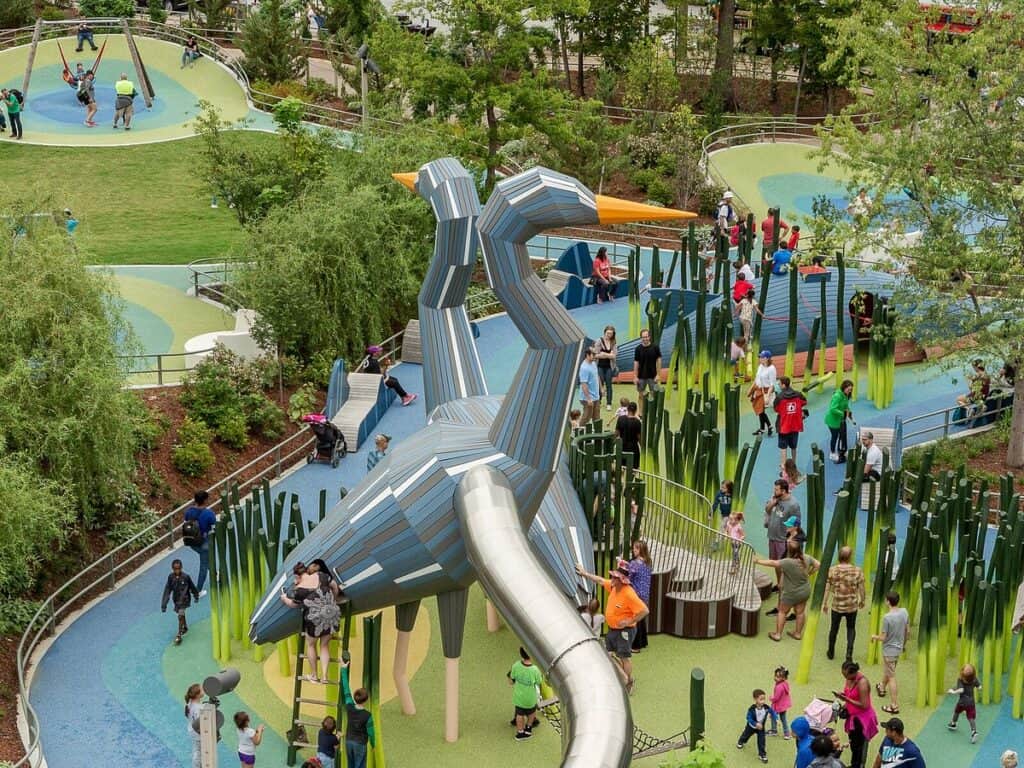
- Gathering Place: The thesis was that a philanthropic park could function as a civic equalizer. Over more than seven years, we stayed with that thesis, from naming and brand strategy through stakeholder engagement, donor communications, and the first 100 days celebration.
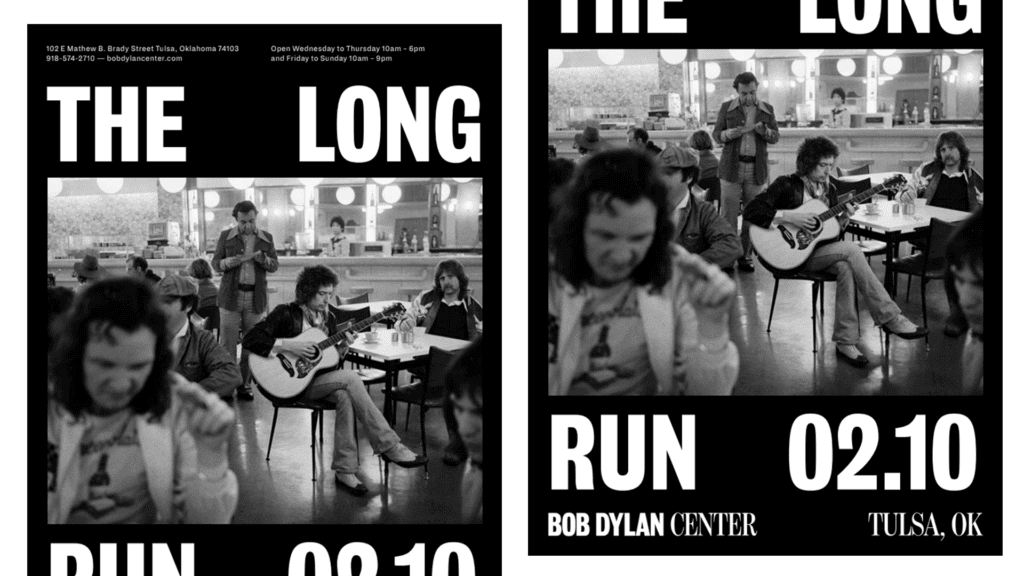
- Bob Dylan Center: The thesis was that Tulsa could credibly host a world-class cultural institution and be treated as such. Saxum helped build a launch approach that would be judged by global media, not just local coverage.
The discipline is simple:
- Write the thesis down in one or two sentences.
- Name the metrics and signals that would prove it right or prove it wrong.
- Build everything else from there.
If your team can’t say, in plain language, what your next investment in place is supposed to prove, you don’t have a place strategy yet. You have a construction plan. If your only metric is attendance, you built an event.
If your team can’t say, in plain language, what your next investment in place is supposed to prove, you don’t have a place strategy yet. You have a construction plan.
Most place work leans hard in one of two directions:
- Beautiful renderings, soaring language, vague reports.
- Or spreadsheets, dashboards, and no real story people can repeat.
You need both.
Pride is what moves residents, donors, and frontline partners to show up.
Proof is what moves boards, investors, and oversight bodies to stay committed when the next budget cycle hits.
In this portfolio, you can see that balance:
- Best Summer Ever wrapped Oklahoma’s 30+ state parks into a confident, nostalgic story, and then backed it up with performance:
- Over 61 million paid impressions.
- Nearly 50,000 incremental park visits.
- More than 36,000 bookings over a 2-month period, worth almost $3.7M.
- A 30% increase in bookings and 29% increase in booking revenue year-over-year.
- Gathering Place anchored its promise in a simple idea: “a place where all of Tulsa can gather.” Then, we proved it:
- More than 18,000 visitors on opening day and 50,000 on opening weekend.
- 77 media placements delivering more than 57 million impressions, locally and nationally for the opening weekend.
- A Reading Tree Challenge that mobilized 2.3 million logged books and 2,500 average quarterly logins from kids and families leading up to opening.
- Bob Dylan Center led with a clear stance: not a shrine, but a living institution rooted in a serious archive. On opening, our media work delivered:
- 895+ media placements.
- An estimated 3.7 trillion impressions.
- 50+ credentialed media outlets on site, supported through curated packets and check-in operations.
The common thread: we never told a story we couldn’t support, and we never reduced success to a single number. If you want a place to last, you have to ask both questions:
- Will people feel proud to be associated with this?
- Will we have enough grounded evidence to keep supporting it once scrutiny comes?
If either answer is weak, the project is fragile.
2
Design for Pride and Proof.
We never told a story we couldn’t support, and we never reduced success to a single number.
3
The Target Audience Isn’t Glamorous.
Place investments attract big language fast: “Everyone.” “All residents.” “The world.”
In reality, there are a few specific audiences whose reactions will make or break the effort:
- Families deciding whether to take one more in-state trip before school starts.
- Founders and creatives choosing whether to commit to your city or take their talent elsewhere.
- Neighborhoods that have watched investments pass them by before.
- Critics and cultural leaders who can either dismiss your project or elevate it.
The work in Oklahoma forced hard choices:
- Best Summer Ever focused on the people whose decisions actually move rooms, tickets, and bookings, not on a generic “visitor.”
- Citizen centered on builders and ecosystem partners who would either give the hub real life or leave it hollow.
- Gathering Place listened carefully to communities that had the most reason to distrust big promises.
- The Bob Dylan Center took seriously the expectations of Dylan’s global audience, while still making room for Tulsa residents to see themselves in the story.
That level of specificity is uncomfortable because it makes trade-offs explicit, but it’s also where trust and traction come from. If you can’t name, in order of importance, the audience this place must earn in year one, you’re not ready to break ground.
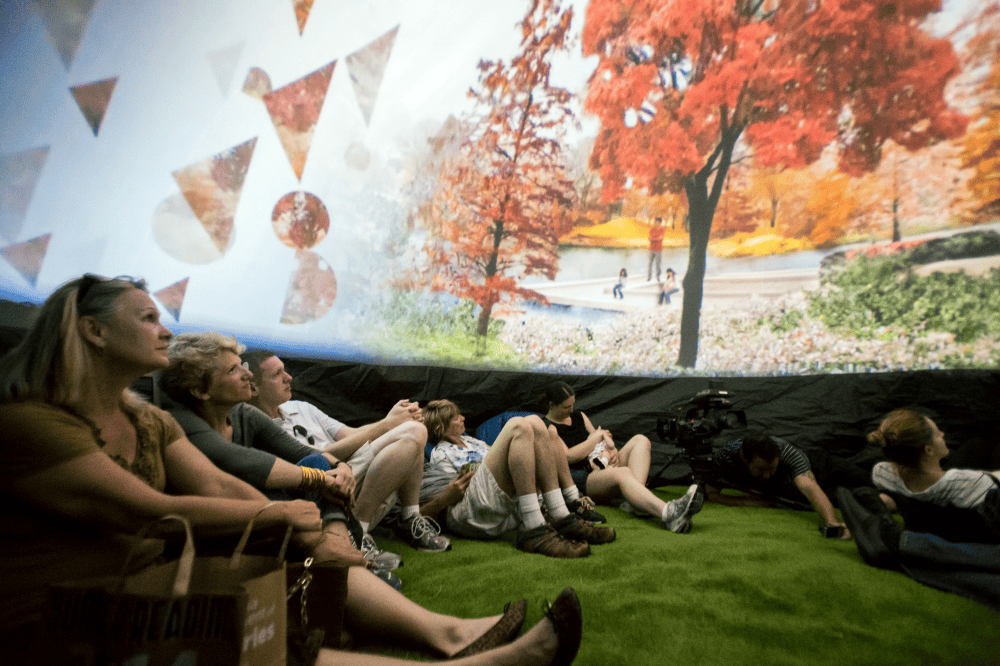
SequencesMany remember the ribbon-cutting, but most of the value comes from everything wrapped around it. Leaders who treat place as a long-term asset don’t merely ask, “How do we launch?” They ask, “What system are we putting around this place so it keeps doing its job?”
That’s where Saxum’s stack stops being theory and starts being useful. You don’t need all five parts turned up to 10 all the time. You need the right mix for the kind of bet you’re making.
Best Summer Ever: Clarity + Momentum done right
- The critical move was pairing sharp Clarity with real Momentum. Saxum deeply understood how families plan trips, then built a campaign engine that made it easy to say “yes” to Oklahoma, and we saw it show up in bookings, revenue, and park usage. It was designed as a repeatable pattern, even though external factors kept it from running again immediately.
Gathering Place: Vision + Adapt over the long haul
- Gathering Place is what it looks like when Vision and Adapt stay in the room for years, not months. Over more than seven years, Saxum stayed in the work, from early concept and naming to donor communications, stakeholder engagement, opening, and the first hundred days of operation. As the park evolved, so did the story, the programming support, and the way we measured success. The stack here wasn’t a phase gate; it was a living operating model.
Bob Dylan Center: Influence with feedback built in
- Influence was the point of the spear: landing nearly 900 placements and global coverage that treated Tulsa as a credible cultural stop. But behind the scenes, we were running Adapt quietly, using feedback from press, visitors, and the client team in those first weeks to refine messaging, FAQs, and on-site details so the experience kept pacing the story.
In each case, the stack shows up as a system:
- Clarity to see what’s really happening.
- Vision to determine for what the place needs to stand.
- Momentum to turn that into lived experience.
- Influence to make sure the right people see it.
- Adapt to keep all of that honest over time.
You don’t need a 50-slide framework to get this right. You need to be explicit about which parts of the system matter most for this place, in this moment and make sure someone is responsible for keeping that system running after the ribbon is cut.
4
Build a System, Not a Single Moment.
You don’t need a 50-slide framework to get this right. You need to be explicit about which parts of the system matter most for this place, in this moment and make sure someone is responsible for keeping that system running.
5
Put owners at the table, not just vendors.
Place work is messy by design: Public hearings, Board tension. It doesn’t stay inside a clean project plan. That’s why “vendor” relationships break under the weight. You don’t need more tasks done; you need people holding the same outcome you do.
That’s the role Saxum plays as a strategic consultancy and transformation partner: we bring a team of owners to the table, not just deliverables.
Across these four efforts, here is what that looked like:
Shared outcomes, not siloed scopes.
- On Gathering Place, we weren’t just responsible for “PR” or “creative.” We carried donor relations strategy, naming, brand identity, stakeholder engagement, event strategy, and media across more than a decade and were accountable for how all of it worked together.
- On Bob Dylan Center, our remit ran from media strategy and field logistics to credentialing, materials design, and coordination with GKFF. We were judged on whether the Center landed as serious and globally relevant, not just on how many releases we sent.
A flexible talent model that scales with the stakes.
- Domain Catalysts in civic, tourism, and cultural strategy.
- A talent network that lets us bring in specialized partners for experiential production, programming, or advanced analytics only when they’re truly needed.
Partnerships that move from project to platform.
- Best Summer Ever functioned as an accelerator: a focused, high-impact push to prove what a smarter statewide campaign could do.
- Gathering Place and the Bob Dylan Center operated more like platforms: long-horizon collaborations where we helped leadership navigate phases: concept, build, launch, and live operation.
Our internal question is simple:
“If we were on the client’s side of the table, what would we insist on doing next?”
If a partner can’t answer that question with you, clearly, calmly, and without hedging, they’re not acting as a transformation partner. They’re filling a role.

Transformation Arc℠
Our job is simple: bring clarity, ingenuity, and humanity to your decision so the places you build up endure.

How Saxum Shows Up in Place Work
Saxum exists to strengthen bedrock organizations that serve citizens, community, and country. Place is one of the most visible ways those organizations lead. In Oklahoma, that has meant:
- A statewide summer that actually filled rooms.
- A building that shows where a city’s economy is heading.
- A park and a cultural center that changed the story people tell about Tulsa.
The next place decision you make will carry similar weight.
Our job is simple: bring clarity, ingenuity, and humanity to that decision so the place you build doesn’t just open, it endures.
Implications
Questions to ask before your next place bet.
Whether you’re looking at a campus, a hub, a district, or an institution, a few questions can clarify whether you’re treating place as background or as a real lever:
- What is the thesis behind this investment, in one or two sentences?
- Who are the three audiences whose reactions will matter most in year one?
- How will we know, beyond anecdotes, if this place is doing what we asked it to do?
- What system surrounds the ribbon cutting: story, programming, measurement, governance?
- Who on our side, and on the partner side, is acting as an owner, not just delivering tasks?
If those answers feel vague, you’re still early.
That’s not a problem. It’s a signal.